 <
<

Most people who want a ham radio license never actually fail the test. They just never get around to taking it.
They buy a Baofeng, start reading about antennas and radio theory, tell themselves they need to learn a little more first, and a year later the radio is still sitting in a drawer.
Don’t do that.
Set a date, work a plan and quit trying to become an electrical engineer before you’re allowed to key a microphone. Thirty days is more than enough time to earn your Technician license. If you stay on it, you may be ready in two weeks.
What you’re actually testing for
The Technician license is the entry-level FCC amateur radio license. The exam consists of 35 multiple-choice questions, and you need 26 correct answers to pass.
There is no Morse code requirement, no prerequisite license and no requirement that you already know how to operate a radio.
For those of us interested in preparedness and emergency communications, the Technician license gives you quite a bit:
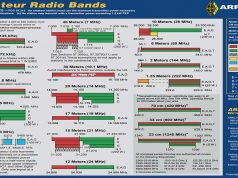
- Full privileges on everything above 50 MHz. That’s 6 meters, 2 meters, 1.25 meters, 70 centimeters and up, which covers repeaters, simplex, ARES and RACES nets, packet, APRS and satellites.
- Voice on 10 meters from 28.300 to 28.500 MHz. It’s the only HF band where Technicians can transmit voice, and when the band is open you can work thousands of miles on a wire.
- Digital on 10 meters, RTTY and data from 28.000 to 28.300 MHz. That includes FT8 at 28.074 MHz.
- CW on 80, 40 and 15 meters if you go that direction.
Technicians are limited to 200 watts PEP on their HF allocations. Above 30 MHz, the amateur power limit can be as high as 1,500 watts PEP where permitted.
For local and regional emergency communications, that’s far more capability than most people will ever need.
The question pool changed this summer
This one is important.
The Technician question pool changed on July 1, 2026.
The current NCVEC 2026-2030 Technician Element 2 question pool contains 409 questions. It replaced the previous 2022-2026 pool and remains valid through June 30, 2030.
So if you bought an old study book, downloaded an old app or bookmarked an old practice-test site, check what question pool it’s using.
If it doesn’t say 2026-2030, don’t rely on it for your final exam preparation.
The underlying radio theory hasn’t suddenly changed, but questions have been added, removed and rewritten. There is no reason to lose points because you studied an expired pool.
Before Day 1: Get Your FRN
Before you start worrying about Ohm’s Law or antenna calculations, take care of the paperwork.
Register with the FCC’s CORES system and obtain your FCC Registration Number, or FRN.
You’ll need your FRN when you take the exam, and you’ll also need a working email address associated with your FCC account.
Do this before test day.
It only takes a few minutes, and it eliminates one more thing that can slow down your application after you pass.
Days 1-10: Learn the Concepts
For the first ten days, put in roughly 30 to 45 minutes a day.
Concentrate on the major Technician topics:
- FCC rules and Part 97
- Operating procedures
- Frequencies and band privileges
- Radio equipment
- Antennas and feed lines
- Basic electronics
- RF safety
- Emergency communications
The important thing during this stage is understanding what you’re reading.
You don’t need to know enough electronics to design a radio from scratch. You need enough understanding to recognize the concepts being tested and know why an answer makes sense.
This is where a lot of new hams screw themselves up. They think they aren’t allowed to take the test until they understand every piece of radio theory.
You don’t.
Learn the fundamentals and keep moving.
Days 11-20: Start Hammering the Actual Question Pool
Now start working directly with the current 2026-2030 Technician question pool.
Your exam questions are drawn from this published pool, so recognizing the questions and understanding the answers gives you a huge advantage.
Work through the pool one section at a time.
When you miss something, don’t just memorize the letter next to the correct answer. Figure out why you missed it.
Pay particular attention to questions you miss repeatedly.
The Technician pool is divided into ten major subelements, T1 through T0, covering everything from FCC rules and operating practices to electronics, antennas and safety.
Your exam pulls questions from across these areas, so trying to completely ignore a section isn’t a great strategy.
You don’t have to become an expert in every subject. You just need enough familiarity that nothing on the actual exam looks completely foreign.
Days 21-26: Start Taking Practice Exams
By the third week, you should be taking complete 35-question Technician practice exams.
Take at least one every day.
At this point, stop spending the same amount of study time on subjects you already understand. Put your time into the areas where you’re losing points.
For a lot of people, the trouble spots are:
- Ohm’s Law
- Electrical power calculations
- Frequency and wavelength
- Antenna length calculations
- Band edges
- Technician operating privileges
- Part 97 rules
- Call sign identification requirements
- Feed lines
- SWR
- Impedance matching
If you’re getting nearly every operating question right but blowing half the electrical questions, there is no reason to spend another night rereading operating procedures.
Attack the stuff you’re getting wrong.
Six days spent working on your weakest subjects will usually do far more for your score than six more days of rereading the entire study guide.
Days 27-29: Build Yourself Some Breathing Room
You need 26 correct answers out of 35 to pass.
That doesn’t mean you should schedule your exam the first time you score 26.
Keep taking practice exams until you’re consistently scoring around 85 to 90 percent.
Ideally, hit that range several times in a row.
The reason is simple. Sitting at home taking a practice test isn’t quite the same as taking the real exam. You may misread something. You may second-guess an answer you already knew. You may get a handful of questions concentrated in subjects you don’t like.
Give yourself some margin.
If you’re regularly scoring in the high 80s or better, you’re probably spending more time worrying about the test than you need to.
Go take it.
Day 30: Take the Technician Exam
Amateur radio exams are administered by Volunteer Examiner teams.
You can take the Technician exam through an in-person VE session or through one of the remote online testing sessions available from various VEC organizations.
That means even if you live in the middle of nowhere, finding an exam shouldn’t be much of an excuse anymore.
Exam fees depend on the VEC.
For example:
- The 2026 ARRL VEC examination fee is $15.
- Laurel VEC offers exams without an examination fee.
- GLAARG charges $10.
- W5YI charges $14.
There is also a separate $35 FCC application fee for a new amateur radio license. That money is paid to the FCC, not your Volunteer Examiner.
ARRL also operates its Youth Licensing Grant Program. For qualifying applicants under 18 testing through the ARRL VEC, the exam fee is reduced to $5 and the FCC application fee can be reimbursed.
Realistically, you’re looking at around $35 to $50 total to obtain a license that lasts ten years.to one.
What Happens After You Pass?
After you pass, the Volunteer Examiner team submits your examination results through its VEC.
The FCC will then process your application and send payment instructions for the $35 application fee.
Once the FCC issues your call sign and it appears in the ULS database, you’re licensed and can begin transmitting under your Technician privileges.
There is no paper license arriving in the mailbox anymore. You can download the official copy of your license through the FCC system.
Depending on how quickly everything is filed and processed, figure on anything from a few business days to roughly a week between taking the exam and seeing your call sign.
Use that time.
Program your local repeaters. Build a frequency list. Listen to local traffic. Figure out when the local nets are held. Learn how people actually operate before jumping into the middle of a net.
Prepper Radio
The No-BS Ham Radio Technician Exam Prep Guide
Everything above works, but you’re stitching it together from five different sources. Half of them are written by engineers for engineers, and none of them care whether you can actually communicate when the grid is down.
That’s why we wrote it. From the team behind OFFGRIDSurvival.com and this site: 225 pages, written by preppers for preppers, emergency communications first and the test second.
Why it’s different
Want to compress that 30-day plan into something closer to two weeks? One source, start to finish, written by people who actually operate.
Best radios for new hams
Every radio below is one we’ve actually reviewed here on Ham Radio Prepper. No roundups of gear we’ve never had our hands on.
Your first handheld
Yaesu VX-6R — Our go-to bug-out handheld for years now. It’s a tri-bander, so you transmit on 2 meters, 1.25 meters and 70 centimeters, and 1.25m is a useful band that almost nobody else is sitting on. Weather resistant, built like a tank, and the receive coverage runs from 504 kHz up to nearly 999 MHz, which makes it as good for monitoring as it is for transmitting. If you only ever own one HT, own this one. Read the full review
One thing about any handheld: upgrade the antenna. The stock rubber duck is the weakest link in the whole chain and a better antenna will do more for your range than another five watts ever will.
Your first mobile rig
Kenwood TM-281A — A no-frills 65-watt 2-meter mobile. Our one gripe is that it’s single band, but the upside is there’s almost nothing on it to break, which is exactly what we want in an emergency communications radio. Dead simple to program by hand, and it’ll put a real signal into repeaters your handheld can’t touch from inside a vehicle. Read the full review
Your first do-everything rig
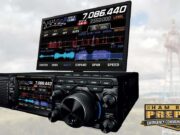
Yaesu FT-991A — If you’d rather buy once, this covers 160 meters through 70 centimeters in one compact box. Good filtering, solid receive sensitivity, a real-time spectrum scope and a built-in tuner. As a new Technician you’d run it on VHF/UHF and your 10-meter privileges, and when you upgrade to General nothing changes but your band edges. Read the full review
Getting on HF without breaking the bank!
Technicians have 10-meter voice and digital privileges right now, and all of these give you that plus an upgrade path:
- Yaesu FT-450D — Entry-level HF covering 160 through 10 meters plus 6. One of the radios that topped our budget HF list. Simple and a solid emergency comms base station, though it struggles a bit with urban noise. Read the full review
- Icom IC-718 — Cheap, simple and nearly indestructible. Plenty of hams have run these for ten years and counting. No internal tuner, which we don’t mind. Read the full review
- Yaesu FT-891 — Compact mobile HF that punches above its size. The right call if your comms plan involves a vehicle. Read the full review
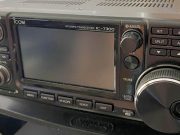
- Icom IC-7300 — For when you’re ready to stop compromising. Crystal clear and seriously sensitive. Read the full review
Whatever you spend on the radio, spend real money and real effort on the antenna and feed line. A $150 radio on a good antenna beats a $1,500 radio on a bad one every time.