 <
<
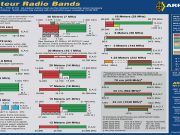

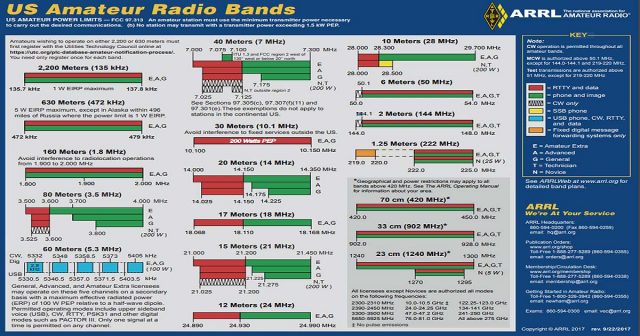
US Amateur Radio Bands: Frequency Charts and Band Plans
Every US ham band, sorted by what it’s good for when the grid is down — not by frequency order. Start with the band that reaches the distance you need, then check whether your license covers it.
Start Here
Pick the distance you need to cover. The band follows from that.The rule that matters when it counts
Under §97.403, when there is immediate danger to life or property and normal communication channels are unavailable, any station may use any means of radiocommunication at its disposal to call for help. That is the emergency exception — not a license, and not a loophole for day-to-day use. Outside of that narrow case, transmitting on these bands without the right license class is illegal, and a violation is easy to direction-find.
If You Remember Nothing Else
Monitor & Calling Frequencies
Program these first. These are where people actually call for contact.Worth monitoring outside the ham bands
162.400–162.550 NOAA Weather Radio (7 channels) · 156.800 Marine VHF Ch 16 distress · 121.500 aviation emergency · 27.065 CB Ch 9 emergency and 27.185 CB Ch 19 highway · 151.820–154.600 MURS · 462/467 FRS and GMRS · 160–161 railroad road channels.
Listening to any of these requires no license at all. Building the habit of monitoring before you need to is the entire point.
Band by Band
Filter to your license class to see only what you can legally transmit on.2 Meters
144.0 – 148.0 MHzThe workhorse. If you own one radio, it works here. Every US ham above Novice has full privileges on this band, handhelds are cheap, repeater coverage is dense, and a quarter-wave antenna is 19 inches long. This is where local emergency nets live.
- Realistic range
- 1–5 mi simplex HT to HT; 20–50 mi via repeater
- Antenna
- 19″ quarter wave — trivially portable
- Best for
- Family, neighborhood, county nets, ARES/RACES
- Weakness
- Line of sight. Terrain stops it cold.
| Class | Frequencies | Modes |
|---|---|---|
| All except Novice | 144.0–144.1 MHz | CW only |
| All except Novice | 144.1–148.0 MHz | CW, Phone, Image, MCW, RTTY/Data |
70 Centimeters
420.0 – 450.0 MHzThe urban partner to 2 meters. Shorter wavelength penetrates buildings and reflects around structures better, so it often wins downtown where 2m struggles. Nearly every dual-band handheld covers both, so there is no reason not to have both programmed.
- Realistic range
- Slightly less than 2m in open terrain; often better in cities
- Antenna
- 6″ quarter wave — pocketable
- Best for
- Urban simplex, linked repeater systems, digital voice
- Weakness
- Foliage and rain absorb it more than 2m
| Class | Frequencies | Modes |
|---|---|---|
| All except Novice | 420.0–450.0 MHz | CW, Phone, Image, MCW, RTTY/Data |
1.25 Meters
222.0 – 225.0 MHzThe forgotten band, and that is exactly why it is valuable. Almost nobody monitors 222 MHz, which means when 2 meters is saturated with traffic or deliberately jammed, this band is wide open. Radios are less common and cost more, but propagation sits nicely between 2m and 70cm. A genuine sleeper for group comms.
- Realistic range
- Comparable to 2m, sometimes slightly better
- Antenna
- 12″ quarter wave
- Best for
- Uncongested group comms, backup to 2m
- Weakness
- Limited radio selection; few repeaters
| Class | Frequencies | Modes |
|---|---|---|
| All classes | 222.00–225.00 MHz | CW, Phone, Image, MCW, RTTY/Data — Novices limited to 25 W PEP |
| All except Novice | 219–220 MHz | Fixed digital message forwarding only, secondary, 50 W PEP |
6 Meters
50.0 – 54.0 MHzCalled the Magic Band for good reason. Most days it behaves like a slightly better 2 meters. Then sporadic-E propagation opens and a Technician with 50 watts is suddenly talking a thousand miles with no repeater and no HF license. Unpredictable, but it is the one place a Technician gets real distance.
- Realistic range
- Local most days; 500–1,500 mi during openings
- Antenna
- Roughly 4.5 ft quarter wave — vehicle-mountable
- Best for
- Technicians who want range without an upgrade
- Weakness
- You cannot schedule an opening. Peaks late spring through summer.
| Class | Frequencies | Modes |
|---|---|---|
| All except Novice | 50.0–50.1 MHz | CW only |
| All except Novice | 50.1–54.0 MHz | CW, Phone, Image, MCW, RTTY/Data |
10 Meters
28.0 – 29.7 MHzThe only HF band where a Technician gets voice privileges — and most Technicians never find out. 28.300–28.500 MHz is open to Technicians for SSB at up to 200 watts. When the solar cycle is strong, this band goes worldwide on modest power. When it is weak, it is nearly dead. We are past the peak of Cycle 25, so conditions are gradually declining but still workable.
- Realistic range
- Global during solar max daytime; local ground wave otherwise
- Antenna
- 8.5 ft quarter wave — smallest practical HF antenna
- Best for
- Technicians testing HF before upgrading
- Weakness
- Entirely dependent on solar activity
| Class | Frequencies | Modes |
|---|---|---|
| Tech & Novice | 28.000–28.300 MHz | CW, RTTY/Data — max 200 W PEP |
| Tech & Novice | 28.300–28.500 MHz | CW, Phone — max 200 W PEP |
| General+ | 28.000–28.300 MHz | CW, RTTY/Data |
| General+ | 28.300–29.700 MHz | CW, Phone, Image |
40 Meters
7.0 – 7.3 MHzIf you can only have one HF band, make it this one. 40 meters is the most dependable all-season regional band there is. By day, a low dipole gives you NVIS coverage out to a few hundred miles with no repeater, no internet and no infrastructure. By night it stretches across the continent. This is the backbone of serious emergency HF work.
- Realistic range
- 50–400 mi day (NVIS); 1,000+ mi night
- Antenna
- 66 ft dipole, hung 15–25 ft for NVIS
- Best for
- State and regional emergency nets, the primary prepper HF band
- Weakness
- Crowded, and shares space with powerful shortwave broadcasters
| Class | Frequencies | Modes |
|---|---|---|
| Tech & Novice | 7.025–7.125 MHz | CW only |
| General | 7.025–7.125 MHz | CW, RTTY/Data |
| General | 7.175–7.300 MHz | CW, Phone, Image |
| Advanced | 7.125–7.300 MHz | CW, Phone, Image |
| Extra | 7.000–7.125 MHz | CW, RTTY/Data |
| Extra | 7.125–7.300 MHz | CW, Phone, Image |
80 / 75 Meters
3.5 – 4.0 MHz40 meters’ night shift. When the sun goes down and 40 gets long and skips over your neighbors, 80 meters keeps regional traffic alive out to a few hundred miles. Most state and section emergency nets meet here after dark. The catch is size: a full dipole is 130 feet of wire, which rules it out for a lot of suburban lots.
- Realistic range
- Regional after dark; short range by day
- Antenna
- 130 ft dipole — the real constraint on this band
- Best for
- Nighttime regional nets, winter operation
- Weakness
- Antenna size, and heavy static in summer storms
| Class | Frequencies | Modes |
|---|---|---|
| Tech & Novice | 3.525–3.600 MHz | CW only |
| General | 3.525–3.600 MHz | CW, RTTY/Data |
| General | 3.800–4.000 MHz | CW, Phone, Image |
| Advanced | 3.700–4.000 MHz | CW, Phone, Image |
| Extra | 3.500–3.600 MHz | CW, RTTY/Data |
| Extra | 3.600–4.000 MHz | CW, Phone, Image |
20 Meters
14.0 – 14.35 MHzThe long-haul band. 20 meters is open to somewhere in the world almost every daylight hour, in nearly any part of the solar cycle — which is why it is the most reliable choice for reaching outside your region. If your plan involves contacting people more than a few states away, this is the band. 14.300 MHz has carried emergency and health-and-welfare traffic for decades.
- Realistic range
- 1,000 mi to worldwide, daytime
- Antenna
- 33 ft dipole, or a compact vertical
- Best for
- Out-of-region contact, long-distance nets, digital modes
- Weakness
- Largely closes at night. Poor for talking to your own county.
| Class | Frequencies | Modes |
|---|---|---|
| General | 14.025–14.150 MHz | CW, RTTY/Data |
| General | 14.225–14.350 MHz | CW, Phone, Image |
| Advanced | 14.175–14.350 MHz | CW, Phone, Image |
| Extra | 14.000–14.150 MHz | CW, RTTY/Data |
| Extra | 14.150–14.350 MHz | CW, Phone, Image |
60 Meters
5.3 – 5.4 MHz — channelizedUnusual and strategically important: this band is shared directly with federal government stations, which makes it the natural place for amateur-to-agency interoperability during a disaster. It fills the propagation gap between 40m and 80m, giving solid NVIS coverage around the clock. The rules changed on 13 February 2026 — see the notice below.
- Realistic range
- Reliable NVIS out to ~400 mi, day or night
- Antenna
- ~88 ft dipole, low
- Best for
- Interoperability with federal stations, gap-filling NVIS
- Weakness
- Secondary status, low power, USB only on the channels
| Channel center | Tune your radio to | Power limit |
|---|---|---|
| 5332 kHz | 5330.5 kHz | 100 W ERP |
| 5348 kHz | 5346.5 kHz | 100 W ERP |
| 5373 kHz | 5371.5 kHz | 100 W ERP |
| 5405 kHz | 5403.5 kHz | 100 W ERP |
| 5351.5–5366.5 kHz | Continuous segment, not a channel | 9.15 W ERP |
30 Meters
10.100 – 10.150 MHzA narrow 50 kHz slice with no voice and no contests — which makes it one of the quietest and most orderly bands on HF. Excellent for low-power digital traffic when you need a message to get through rather than a conversation. Behaves like a blend of 40m and 20m, usable day and night.
- Realistic range
- Several hundred to a few thousand miles, around the clock
- Antenna
- 46 ft dipole
- Best for
- CW and digital message traffic, QRP work
- Weakness
- No voice permitted. 200 W ceiling. Shared with other services.
| Class | Frequencies | Modes |
|---|---|---|
| General+ | 10.100–10.150 MHz | CW, RTTY/Data only — max 200 W PEP |
17 Meters
18.068 – 18.168 MHzA WARC band, meaning contests are prohibited here by gentleman’s agreement — so it stays civil even on the busiest weekends. Propagation sits between 20m and 15m, often open when 20 is crowded. A good second choice for long-haul work.
- Realistic range
- Long distance, daytime
- Antenna
- 26 ft dipole
- Best for
- Contest-free long-distance work
- Weakness
- Narrow band, needs decent solar conditions
| Class | Frequencies | Modes |
|---|---|---|
| General+ | 18.068–18.110 MHz | CW, RTTY/Data |
| General+ | 18.110–18.168 MHz | CW, Phone, Image |
15 Meters
21.0 – 21.45 MHzWhen the sun cooperates, 15 meters delivers long distance on modest power with an antenna half the size of a 20m dipole. Strongly tied to the solar cycle — excellent near solar max, thin near solar min. Technicians get CW privileges here.
- Realistic range
- Worldwide daytime when the band is open
- Antenna
- 22 ft dipole — easy to fit on a small lot
- Best for
- Long distance with limited antenna space
- Weakness
- Unusable for long stretches of the solar cycle
| Class | Frequencies | Modes |
|---|---|---|
| Tech & Novice | 21.025–21.200 MHz | CW only |
| General | 21.025–21.200 MHz | CW, RTTY/Data |
| General | 21.275–21.450 MHz | CW, Phone, Image |
| Advanced | 21.225–21.450 MHz | CW, Phone, Image |
| Extra | 21.000–21.200 MHz | CW, RTTY/Data |
| Extra | 21.200–21.450 MHz | CW, Phone, Image |
12 Meters
24.890 – 24.990 MHzAnother WARC band, narrow and contest-free. Behaves much like 10 meters but stays open a bit longer into declining solar conditions. Lightly used, so signals that would be buried on 20m can be readable here.
- Realistic range
- Long distance in good conditions
- Antenna
- 19 ft dipole
- Best for
- Quiet long-distance work near solar max
- Weakness
- Only 100 kHz wide; solar dependent
| Class | Frequencies | Modes |
|---|---|---|
| General+ | 24.890–24.930 MHz | CW, RTTY/Data |
| General+ | 24.930–24.990 MHz | CW, Phone, Image |
160 Meters
1.800 – 2.000 MHzThe Topband, sitting just above the AM broadcast band. Exceptional nighttime groundwave and regional coverage, and largely immune to the solar disturbances that shut down the higher bands — which is a real advantage during a geomagnetic storm. The price is a very large antenna and a lot of daytime absorption.
- Realistic range
- Regional to continental at night; very short by day
- Antenna
- 260 ft dipole full size — most people compromise
- Best for
- Nighttime regional work during solar disturbances
- Weakness
- Antenna size, summer static, daytime uselessness
| Class | Frequencies | Modes |
|---|---|---|
| General+ | 1.800–2.000 MHz | CW, Phone, Image, RTTY/Data |
33 Centimeters
902.0 – 928.0 MHzShares spectrum with unlicensed ISM devices — cordless phones, meters, LoRa gear — so it is noisy. But for hams it is 26 MHz of bandwidth, which makes it useful for high-speed data links and mesh networking between fixed points.
- Realistic range
- Line of sight; good point-to-point with directional antennas
- Antenna
- 3″ quarter wave; small Yagis are very effective
- Best for
- Data links, mesh networks, experimentation
- Weakness
- Crowded with unlicensed devices; limited commercial gear
| Class | Frequencies | Modes |
|---|---|---|
| All except Novice | 902.0–928.0 MHz | CW, Phone, Image, MCW, RTTY/Data |
23 Centimeters
1240 – 1300 MHzSixty megahertz of bandwidth, enough for amateur television and high-rate data. Antennas are tiny and high-gain dishes are practical. Mostly the domain of experimenters, but valuable for dedicated point-to-point links between fixed locations.
- Realistic range
- Line of sight; long hauls possible with dishes
- Antenna
- 2″ quarter wave; small dishes give large gain
- Best for
- ATV, high-rate data, fixed links
- Weakness
- Niche equipment; strictly line of sight
| Class | Frequencies | Modes |
|---|---|---|
| All except Novice | 1240–1300 MHz | CW, Phone, Image, MCW, RTTY/Data |
| Novice | 1270–1295 MHz | CW, Phone, Image, MCW, RTTY/Data — max 5 W PEP |
630 Meters
472 – 479 kHzJust below the AM broadcast band. Remarkably stable propagation with very low power, but a 5 W EIRP ceiling and an enormous antenna requirement put this firmly in experimenter territory. Not a practical emergency communications option for most people.
- Realistic range
- Hundreds of miles at night with an efficient antenna
- Antenna
- Large loaded vertical; efficiency is dismal
- Best for
- Weak-signal experimentation
- Weakness
- 5 W EIRP cap, antenna size, mandatory registration
| Class | Frequencies | Modes |
|---|---|---|
| General+ | 472–479 kHz | CW, Phone, Image, RTTY/Data — max 5 W EIRP |
2200 Meters
135.7 – 137.8 kHzThe lowest amateur allocation, and purely a technical challenge. A 1 W EIRP limit against a wavelength well over a mile means antenna efficiency is measured in fractions of a percent. Fascinating, but there is no realistic prepper application here.
- Realistic range
- Continental with extreme effort and slow digital modes
- Antenna
- Enormous, and still profoundly inefficient
- Best for
- Serious weak-signal experimenters only
- Weakness
- 1 W EIRP. Everything about it is hard.
| Class | Frequencies | Modes |
|---|---|---|
| General+ | 135.7–137.8 kHz | CW, Phone, Image, RTTY/Data — max 1 W EIRP |
Microwave & Above
2.3 GHz and upAll modes are authorized to all licensees except Novices on these allocations, per §97.301(a). Strictly line of sight, but the available bandwidth is vast and small dishes produce enormous gain — useful for dedicated links between fixed sites.
| Allocation | Notes |
|---|---|
| 2300–2310 MHz | 13 cm, lower segment |
| 2390–2450 MHz | 13 cm — shared with Wi-Fi and ISM devices |
| 3300–3450 MHz | 9 cm — reduced from 3500 MHz; amateur use above 3450 MHz ceased 14 April 2022 |
| 5650–5925 MHz | 5 cm |
| 10.0–10.5 GHz | 3 cm — the most active amateur microwave band |
| 24.0–24.25 GHz | 1.2 cm |
| 47.0–47.2 GHz | 6 mm |
| 76.0–81.0 GHz | 4 mm — operation at 76–77 GHz remains suspended pending FCC review of vehicle radar interference |
| 122.25–123.00 GHz | 2.5 mm |
| 134–141 GHz | 2 mm |
| 241–250 GHz | 1 mm |
| Above 300 GHz | All amateur use permitted |
Power Limits
1500 W PEP is the general ceiling. These are the exceptions.| Where | Limit | Why |
|---|---|---|
| All bands, default | 1500 W PEP | §97.313(b) |
| 30 meters | 200 W PEP | Shared with other services |
| 10 m, Technician & Novice | 200 W PEP | Entry-class restriction |
| 60 m — the four channels | 100 W ERP | Secondary to federal users |
| 60 m — 5351.5–5366.5 kHz | 9.15 W ERP | New WRC-15 allocation, effective Feb 2026 |
| 219–220 MHz | 50 W PEP | Secondary to maritime systems |
| 70 cm, PAVE PAWS areas | 50 W PEP | Federal radar protection |
| 1.25 m, Novice | 25 W PEP | Entry-class restriction |
| 630 meters | 5 W EIRP | Power line carrier protection |
| 23 cm, Novice | 5 W PEP | Entry-class restriction |
| 2200 meters | 1 W EIRP | Power line carrier protection |
The overriding rule
§97.313(a) requires that you use the minimum transmitter power necessary to carry out the desired communications. That is not advisory language — it is the actual rule, and it applies on every band above regardless of the ceiling listed.
What Changed Recently
Older band charts still circulating online have these wrong.| Effective | Change |
|---|---|
| 13 Feb 2026 | 60 meters restructured — new 5351.5–5366.5 kHz segment at 9.15 W ERP, with four legacy channels retained at 100 W ERP. The 5358.5 kHz channel now sits inside the low-power segment. |
| 8 Jan 2024 | The 300-baud symbol rate limit was eliminated on the HF bands and replaced with a 2.8 kHz bandwidth limit, opening the door to faster digital protocols. The limit still applies on 630 m and 2200 m. |
| 14 Apr 2022 | The 9 cm band shrank — amateur operation above 3450 MHz ended following the 3.45 GHz spectrum auction. Secondary use of 3300–3450 MHz continues pending further FCC proceedings. |
A note on Novice and Advanced
The FCC stopped issuing Novice and Advanced class licenses in April 2000. Existing holders keep their privileges, which is why those rows still appear in the charts above — but if you are getting licensed today, your path is Technician, then General, then Amateur Extra.